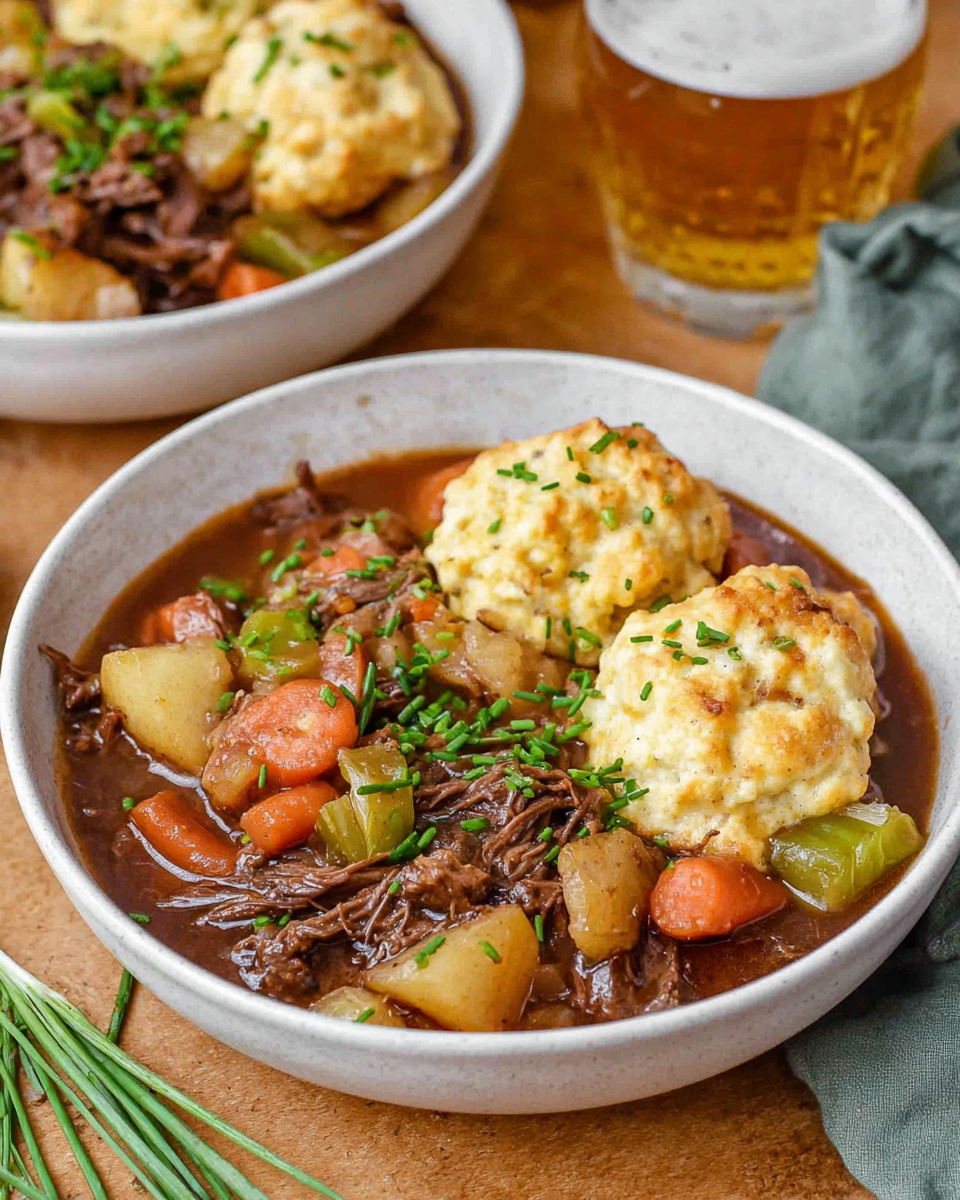
There is something deeply comforting about gathering around a bubbling pot of stew while the kitchen fills with the aroma of rosemary, thyme, garlic, and slow-cooked beef. I love recipes that invite everyone to slow down, share a generous serving, and enjoy the simple pleasure of a homemade meal. This Irish Beef Stew and Cheddar Dumplings recipe brings that cozy feeling straight to the dinner table.
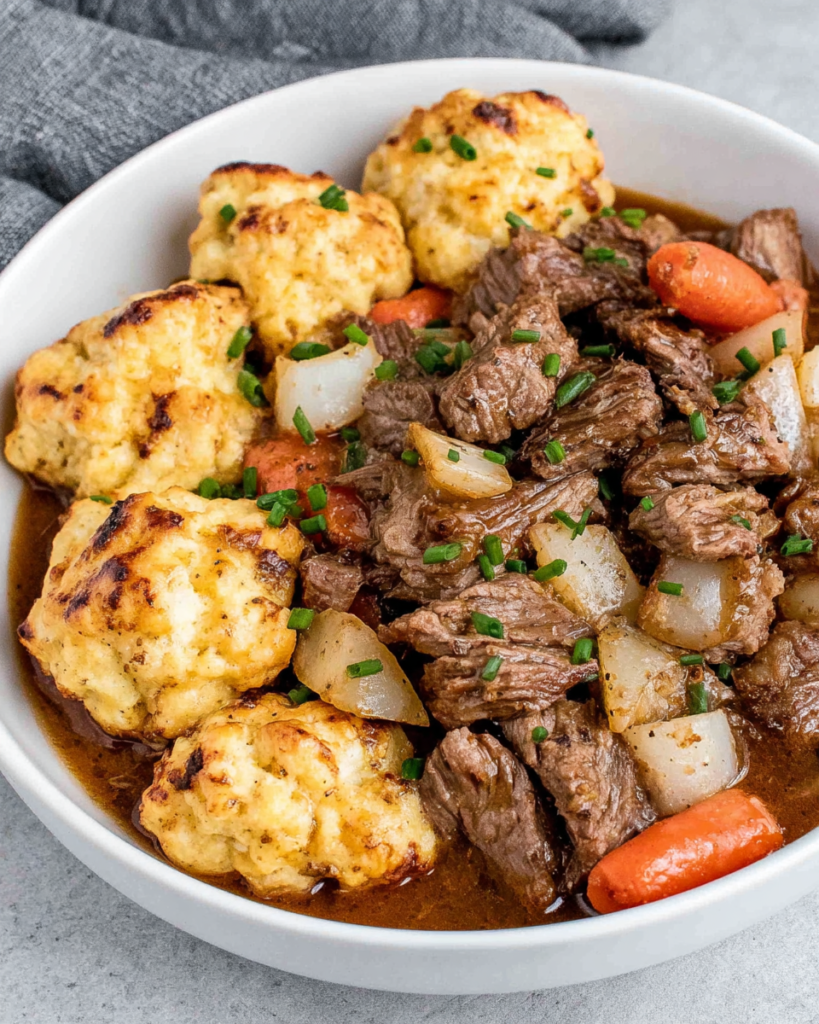
This hearty Irish beef stew combines tender chuck roast, potatoes, carrots, celery, onions, mushrooms, and a Guinness-spiked beef broth. The stew cooks slowly until the beef turns fork-tender and the broth develops a rich, glossy texture. Then, fluffy cheddar chive dumplings finish the dish with a savory layer of melted cheese and tender dough.
Whether you plan a St. Patrick’s Day dinner or simply want a satisfying meal for a chilly evening, this Irish beef stew delivers plenty of comforting flavor.
Overview of Irish Beef Stew and Cheddar Dumplings
This Irish beef stew starts with one important step: deeply browning the chuck roast. That browning builds a flavorful foundation for the broth, while the Guinness adds a malty, slightly bitter note that balances the richness of the beef.
The stew also includes fresh thyme, rosemary, garlic, tomato paste, beef stock, bay leaves, carrots, potatoes, celery, and optional button mushrooms. After the beef cooks slowly, the vegetables join the pot so they can retain their shape while absorbing the savory broth.
However, the cheddar dumplings make this recipe especially memorable. You mix Bisquick with garlic powder, aged sharp cheddar, chives, and milk, then spoon the mixture over the simmering stew. The covered dumplings cook gently before you uncover the pot to finish them.
As a result, every serving brings several textures together. The beef turns tender and juicy, the vegetables become soft without falling apart, and the broth develops a thick, glossy consistency. Meanwhile, the dumplings stay fluffy on top and add a rich cheddar flavor.
This Irish beef stew also works well for gatherings because one Dutch oven can feed a crowd. The recipe yields 12 servings, so you can serve it as the centerpiece of a family dinner, St. Patrick’s Day meal, or relaxed weekend gathering.
Ingredients for Irish Beef Stew
For the stew, you will need 3 pounds of chuck roast cut into 2-inch cubes, ¼ cup extra virgin olive oil divided, 2 large yellow onions peeled and quartered, 1 tablespoon finely chopped fresh thyme, 1 tablespoon finely chopped fresh rosemary, 4 cloves garlic peeled and minced, 2 tablespoons tomato paste, 2 cups Guinness divided, 6 cups beef stock divided, 2 dried bay leaves, 6 large carrots peeled and cut into 2-inch pieces, 3 medium potatoes peeled and quartered, 3 stalks celery cut into 2-inch pieces, and 2 cups button mushrooms, whole or halved, if desired.
For the cheddar chive dumplings, prepare 2 cups Bisquick, 1 teaspoon garlic powder, 1 ½ cups aged sharp cheddar cheese shredded, ¼ cup minced chives with some reserved for garnish, and ⅔ cup milk.
Necessary Tools for Preparation
A large Dutch oven provides the best setup because you can brown the beef, build the broth, slow-cook the stew, and finish the dumplings in the same vessel. You will also need a cutting board and chef’s knife for preparing the meat and vegetables.
Keep a mixing bowl and fork nearby for the cheddar dumpling mixture. A sturdy spoon also helps you scrape the browned bits from the bottom of the Dutch oven when you add the Guinness.
Ingredient Additions and Substitutions
- Chuck roast: You can use another well-marbled beef cut suitable for long, slow cooking, although chuck roast provides the tender texture this recipe targets.
- Guinness: Use another dark stout if you prefer a different beer. For a non-alcoholic variation, replace the Guinness with additional beef stock, although the flavor will change.
- Mushrooms: Leave them out if your family does not enjoy mushrooms. The stew still contains plenty of vegetables and flavor.
- Cheddar: Aged sharp cheddar provides a pronounced cheese flavor, but you can use another sharp cheddar when needed.
- Chives: Fresh parsley can provide a different herb note and attractive garnish.
- Milk: Whole milk works well for the dumplings, although another regular milk can also work.
- Bisquick: The recipe specifically uses Bisquick for the dumpling base. A homemade biscuit-style dumpling mixture can work, but it will change the texture and measurements.
Step-by-Step Instructions
Step 1: Pat the beef dry with paper towels. Season every side generously with salt and pepper. Drying the surface helps the beef brown instead of steaming.
Step 2: Add olive oil to the bottom of a large Dutch oven and heat it over medium-high heat. Once the oil becomes hot, add the beef in batches. Leave space between the pieces so each side can brown properly. Brown all sides thoroughly, then transfer the beef to a plate. Repeat until you brown all the meat.
Step 3: Add more olive oil to the Dutch oven if needed. Add one of the quartered onions, fresh thyme, rosemary, garlic, salt, and pepper. Cook for several minutes. Then stir in the tomato paste and cook for another 2 to 3 minutes, stirring occasionally.
Step 4: Pour 1 cup of Guinness into the Dutch oven. Stir well and scrape the browned bits from the bottom of the pan. Bring the liquid to a simmer so those flavorful browned pieces blend into the broth.
Step 5: Return the browned beef and any accumulated juices to the Dutch oven. Add 5 cups of beef stock and the bay leaves. Stir gently so the ingredients settle into the liquid.
Step 6: Cover the Dutch oven and place it in a 325°F oven. Bake the stew for 1 ½ hours.
Step 7: Carefully remove the Dutch oven from the oven. Add the carrots, potatoes, celery, mushrooms if using, and the remaining quartered onion. Stir gently. Pour in the remaining 1 cup of Guinness and 1 cup of beef stock.
Step 8: Cover the Dutch oven again and return it to the oven. Bake for another 1 ½ hours, or until the beef becomes completely tender and pulls apart easily with a fork.
Step 9: Move the Dutch oven to the stovetop and bring the stew to a boil. Then reduce the heat to maintain a low simmer.
Step 10: Prepare the dumplings while the stew reaches a gentle simmer. Add the Bisquick, garlic powder, shredded cheddar, and minced chives to a bowl. Toss everything together with a fork.
Step 11: Drizzle the milk into the dry mixture. Use the fork to combine the ingredients until the dough comes together and no dry spots remain. Avoid overmixing.
Step 12: Drop spoonfuls of the dumpling dough over the surface of the simmering stew. Cover the Dutch oven and maintain a low simmer for 10 minutes.
Step 13: Remove the lid and continue simmering for another 10 minutes. The dumplings should cook through while the stew continues to develop its rich consistency.
Step 14: Garnish the finished stew with the reserved minced chives. Let the Irish beef stew rest for 15 to 30 minutes before serving. This short resting period gives the broth time to settle and makes the dish easier to portion.
Tips for Making Irish Beef Stew
Give the beef enough room while you brown it. Crowding the Dutch oven traps moisture around the meat, which can prevent the deep browning that gives Irish beef stew its rich base. Work in batches instead, even if that adds a few extra minutes.
Dry the beef thoroughly before seasoning it. This small step helps the surface brown more effectively and gives the stew a deeper savory character.
Take your time with the tomato paste. Cooking it briefly with the aromatics helps develop its flavor before the Guinness enters the pot.
When you add the Guinness, scrape the bottom of the Dutch oven carefully. Those browned pieces contribute valuable flavor to the broth.
Cut the vegetables into fairly large pieces because the stew cooks for several hours. Smaller pieces can become overly soft during the long cooking time.
Keep the dumpling simmer low. A vigorous boil can make the dumplings cook unevenly. A gentle simmer gives them time to become fluffy while the stew stays hot underneath.
Do not overmix the dumpling dough. Stir only until the dry ingredients disappear. Excessive mixing can make the dumplings heavier.
Finally, allow the finished Irish beef stew to rest before serving. The short pause helps the flavors come together and gives the broth a slightly thicker consistency.
Storage Instructions
Store leftover Irish beef stew in an airtight container in the refrigerator once it cools. The stew should keep well for several days when properly refrigerated. Store the dumplings with the stew so they can absorb some of the flavorful broth as they rest.
For longer storage, freeze the stew in freezer-safe containers. Leave enough room for expansion and label each container with the date. Thaw frozen stew in the refrigerator before reheating.
Reheat the stew gently on the stovetop over medium-low heat. Stir occasionally and add a small amount of beef stock if the broth becomes too thick. You can also reheat individual portions in the microwave, using short intervals and stirring between them.
The dumplings may soften after refrigeration, but they will still provide a comforting, cheesy topping. Gentle reheating helps protect their texture.
General Information About Irish Beef Stew
Stew has long represented the kind of practical cooking that turns economical ingredients into a substantial meal. Slow cooking allows tougher cuts of beef to become tender while vegetables and aromatics contribute flavor to the cooking liquid.
This version draws inspiration from Irish cooking while also using Guinness as a defining ingredient. The stout gives the broth a deeper color and adds malty bitterness that complements the richness of the beef.
The recipe also has a festive connection because beef stew makes a natural choice for St. Patrick’s Day gatherings. Instead of relying on elaborate preparation, you can place a Dutch oven in the center of the table and let the hearty ingredients create the celebration.
The cheddar dumplings add another layer of comfort. Rather than serving bread separately, this recipe cooks the cheesy dumplings directly over the stew. That approach lets the dumplings soak up some of the savory steam while keeping their fluffy structure.
For another comforting dish with Irish-inspired flavors, you can also explore Irish Seafood Chowder. It offers a completely different combination of seafood and creamy broth while keeping that cozy, satisfying spirit.
FAQs
Can I make Irish beef stew without Guinness?
Yes. You can replace the Guinness with additional beef stock, although the finished stew will not have the same malty, robust flavor. Another dark stout can also provide a similar character.
Why do I need to brown the beef first?
Browning creates a richer foundation for the stew. It also leaves flavorful browned bits in the Dutch oven, which you can loosen with Guinness and incorporate into the broth.
Can I leave out the mushrooms?
Absolutely. The mushrooms remain optional in this recipe. You can omit them without changing the main cooking process.
How do I keep the cheddar dumplings fluffy?
Keep the dough lightly mixed and maintain a low simmer while the dumplings cook. Cover the Dutch oven for the first 10 minutes, then uncover it and continue simmering for another 10 minutes.
Conclusion
This Irish beef stew brings together everything I want from a comforting dinner: tender beef, hearty vegetables, a rich Guinness-infused broth, and fluffy cheddar dumplings that turn a satisfying stew into a complete meal. Although the cooking time takes patience, the hands-on work stays manageable, and the Dutch oven does most of the work.
The result feels generous and welcoming, making this Irish beef stew a wonderful choice for St. Patrick’s Day, Sunday dinner, or any evening when you want something warm and substantial.
If you enjoyed this recipe and want even more delicious inspiration, follow me on Pinterest: https://www.pinterest.com/AngelinaCooking/
Print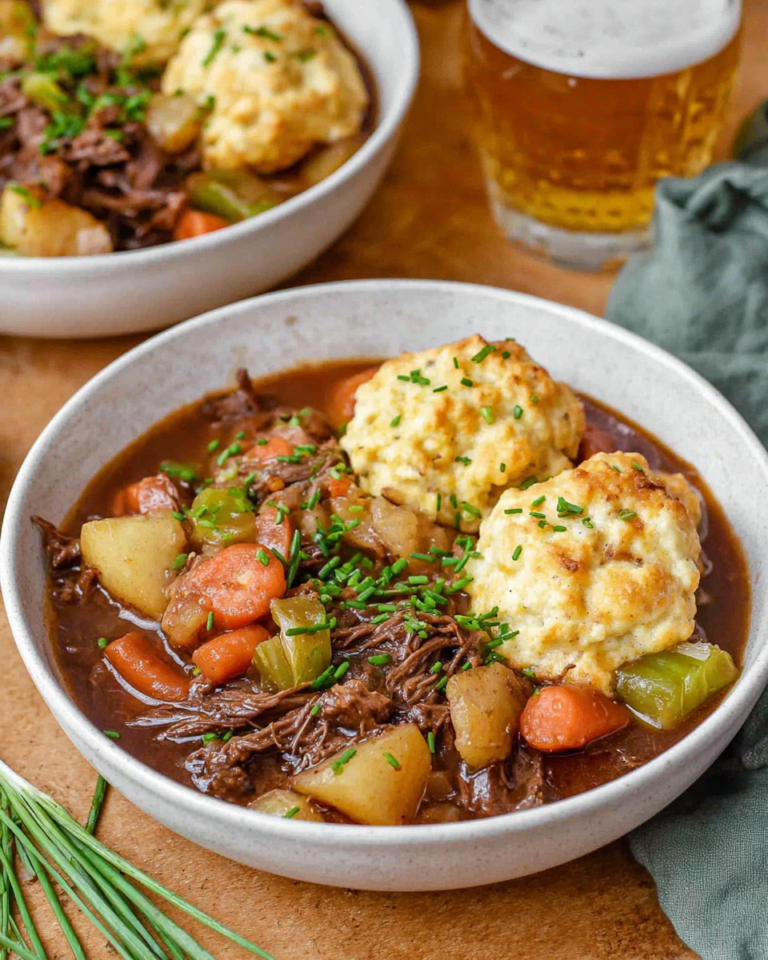
Irish Beef Stew and Cheddar Dumplings
This Irish Beef Stew and Cheddar Dumplings recipe combines tender slow-cooked beef, hearty vegetables, a rich Guinness-spiked broth, and fluffy cheddar chive dumplings for a comforting, satisfying meal.
- Total Time: 4 hours 30 minutes
- Yield: 12 servings 1x
Ingredients
3 pounds chuck roast, cut into 2-inch cubes
1/4 cup extra virgin olive oil, divided
2 large yellow onions, peeled and quartered
1 tablespoon finely chopped fresh thyme
1 tablespoon finely chopped fresh rosemary
4 cloves garlic, peeled and minced
2 tablespoons tomato paste
2 cups Guinness, divided
6 cups beef stock, divided
2 dried bay leaves
6 large carrots, peeled and cut into 2-inch pieces
3 medium potatoes, peeled and quartered
3 stalks celery, cut into 2-inch pieces
2 cups button mushrooms, whole or halved, optional
Cheddar Chive Dumplings:
2 cups Bisquick
1 teaspoon garlic powder
1 1/2 cups aged sharp cheddar cheese, shredded
1/4 cup minced chives, reserving some for garnish
2/3 cup milk
Instructions
1. Dry the beef thoroughly with paper towels and season all sides generously with salt and pepper.
2. Heat olive oil in a Dutch oven over medium-high heat. Brown the beef in batches, leaving space between the pieces. Transfer each browned batch to a plate.
3. Add the quartered onion, thyme, rosemary, garlic, salt, and pepper to the Dutch oven. Cook for several minutes, then stir in the tomato paste and cook for 2 to 3 minutes.
4. Add 1 cup Guinness and scrape the browned bits from the bottom of the Dutch oven. Bring the liquid to a simmer.
5. Return the beef and its juices to the pot. Add 5 cups beef stock and the bay leaves.
6. Cover and bake at 325°F for 1 1/2 hours.
7. Add the carrots, potatoes, celery, mushrooms if using, and remaining onion. Add the remaining Guinness and beef stock.
8. Cover and bake for another 1 1/2 hours, until the beef becomes completely tender and pulls apart easily with a fork.
9. Bring the stew to a boil on the stovetop, then reduce to a low simmer.
10. Combine Bisquick, garlic powder, shredded cheddar, and chives in a bowl using a fork.
11. Add the milk and mix until the dough comes together and no dry spots remain. Do not overmix.
12. Drop spoonfuls of dough over the simmering stew. Cover and simmer for 10 minutes.
13. Uncover and simmer for another 10 minutes.
14. Garnish with reserved chives and let the stew rest for 15 to 30 minutes before serving.
Notes
Brown the beef in batches to develop a richer flavor.
Avoid overcrowding the Dutch oven while browning the meat.
Scrape the browned bits from the bottom of the pot when adding the Guinness.
Keep the stew at a low simmer while cooking the dumplings.
Avoid overmixing the dumpling dough to help keep the dumplings fluffy.
Let the finished stew rest for 15 to 30 minutes before serving.
- Prep Time: 30 minutes
- Cook Time: 3 hours 30 minutes
- Category: Main Course, Side Dish, Soup
- Method: Slow Baking and Stovetop Simmering
- Cuisine: American, British, Irish
Nutrition
- Serving Size: 1 serving
- Calories: 501
Keywords: Irish beef stew, beef stew with dumplings, cheddar dumplings, Guinness beef stew, Irish-inspired stew, St. Patrick’s Day dinner