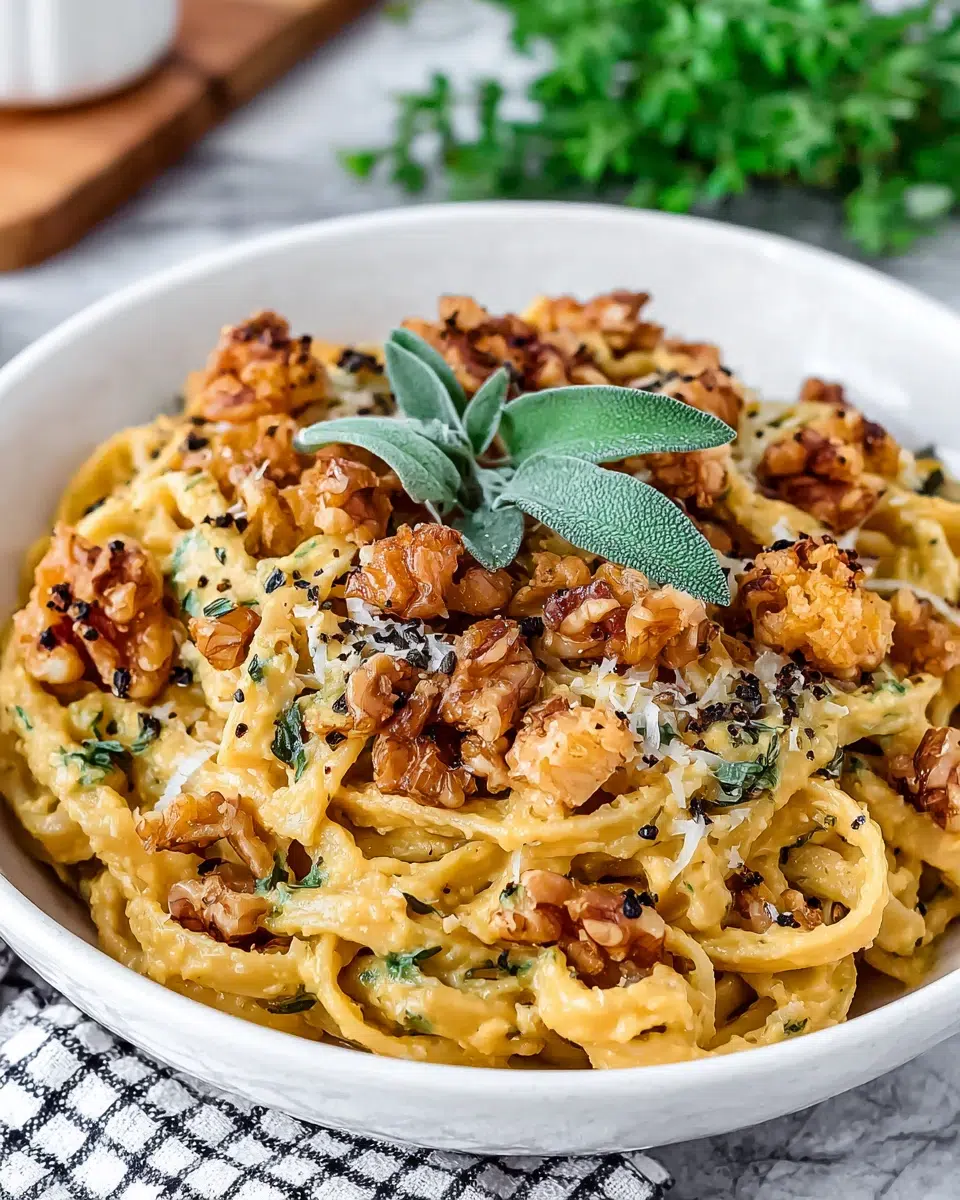
There is something special about the first cool evening of autumn. When the air turns crisp and the kitchen fills with the scent of roasted squash, garlic, and fresh sage, I always find myself reaching for simple recipes that make home feel warm and welcoming. This Butternut Squash Pasta with Sage for Cozy Autumn Nights brings that feeling straight to the dinner table.
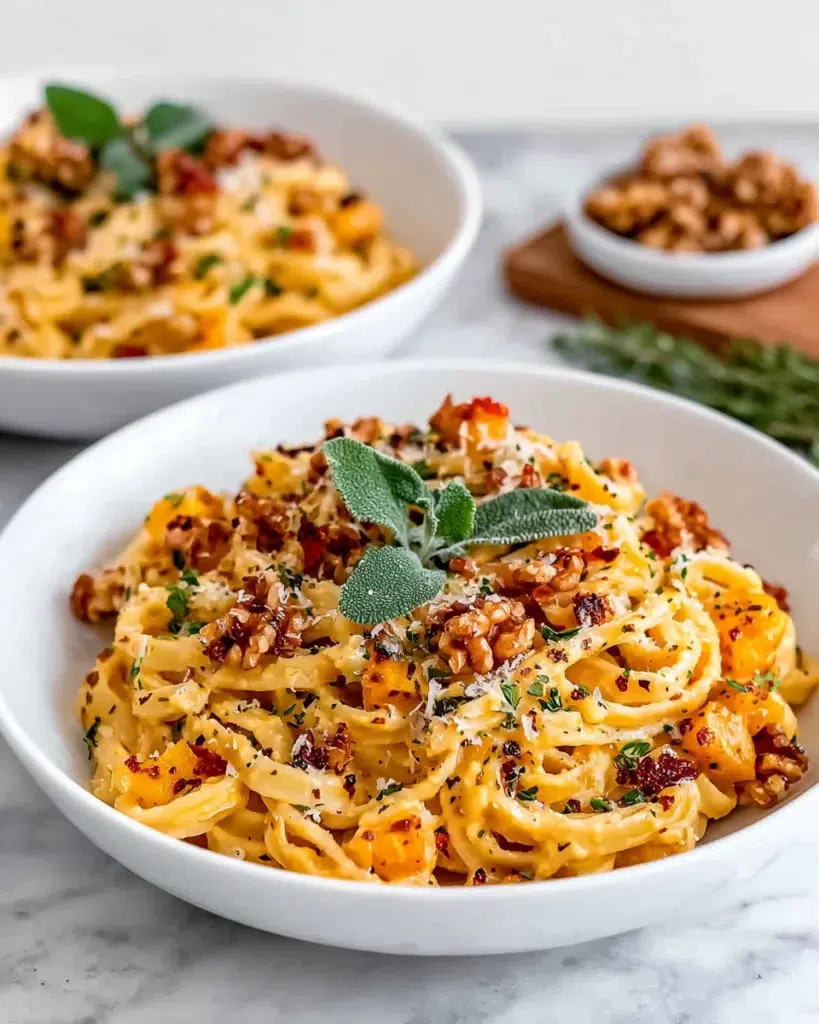
This butternut squash pasta combines tender roasted squash, fragrant sage, Parmesan, and pasta in one comforting meal. The roasted squash develops a naturally sweet flavor and soft texture, while the sage adds an earthy note that balances every bite. Toasted walnuts add a pleasant crunch, although you can easily leave them out.
Best of all, this recipe uses straightforward ingredients and a practical cooking method. You can roast the squash while the pasta cooks, then bring everything together in one skillet. The result feels special enough for a relaxed autumn dinner while remaining simple enough for a weeknight.
Overview of the Recipe
This butternut squash pasta starts with cubed squash seasoned with olive oil, salt, and pepper. Roasting brings out the squash’s natural sweetness and creates caramelized edges. Meanwhile, you cook the pasta until al dente and reserve some pasta water for the sauce.
Next, you sauté onion, garlic, and fresh sage in olive oil. The sage releases its aroma as it cooks, creating a savory base for the squash. After you add the roasted squash and broth, you can gently mash some of the squash to create a creamy texture without adding heavy cream.
Finally, you toss the pasta with the squash mixture and Parmesan. A little reserved pasta water helps loosen the sauce and allows it to coat the noodles evenly.
You will notice several textures in every serving. The sauce feels soft and creamy, the pasta stays pleasantly firm, and the toasted walnuts provide a crisp contrast. The flavor combines sweet roasted squash with savory Parmesan, aromatic sage, garlic, and a gentle touch of black pepper.
This recipe also works well when you want a comforting autumn meal without complicated preparation. You can prepare the squash ahead of time, cook the pasta just before serving, and bring everything together quickly.
Ingredients
You will need 12 ounces of fettuccine or your favorite pasta. Fettuccine works especially well because the broad noodles hold the squash sauce, but you can use another pasta shape if you prefer.
Use 3 cups of peeled and cubed butternut squash, which equals about 1 medium squash. Cut the cubes into similar sizes so they roast evenly.
Add 2 tablespoons of olive oil, divided between the squash and the skillet. The oil helps the squash caramelize while also providing the base for sautéing the aromatics.
Prepare 1 small yellow onion, finely chopped, along with 3 cloves of minced garlic. These ingredients create a savory foundation that balances the sweetness of the squash.
Use 1/4 cup of fresh sage leaves, chopped. Fresh sage gives the pasta its distinctive autumn aroma and earthy flavor.
Add 1/3 cup of vegetable broth or chicken broth. The broth helps create the sauce and gives the squash mixture a smoother consistency.
You will also need 1/2 cup of grated Parmesan cheese. The Parmesan adds savory depth and helps bring the sauce together.
For optional crunch, prepare 1/4 cup of toasted walnuts, chopped. You can also reserve a few whole sage leaves for garnish.
Season with salt and freshly ground black pepper to taste. If you enjoy some heat, add red pepper flakes for a mild kick.
Necessary Tools for Preparation
You will need a baking sheet for roasting the butternut squash and a large pot for cooking the pasta. A large skillet will help you combine the squash sauce and pasta without overcrowding the ingredients.
Keep a chef’s knife and cutting board nearby for chopping the squash, onion, garlic, and sage. You will also need a mixing bowl for tossing the squash with olive oil and seasonings.
A colander makes draining the pasta easier, while a measuring cup helps you reserve pasta water before draining. Use a wooden spoon or silicone spatula to stir the sauce and pasta.
A potato masher or sturdy fork will help you gently mash some of the roasted squash directly in the skillet.
Ingredient Additions & Substitutions
- Pasta: Use fettuccine, linguine, penne, rigatoni, or another pasta shape you enjoy.
- Butternut squash: Substitute another winter squash when seasonal availability changes, although the flavor and texture may vary.
- Broth: Use vegetable broth for a vegetarian option or chicken broth for a slightly richer savory profile.
- Parmesan: Use a vegetarian Parmesan-style cheese if needed, or choose another hard grated cheese that melts well.
- Walnuts: Replace them with toasted pecans or pumpkin seeds for a different crunchy topping.
- Sage: Fresh sage gives the strongest flavor, but you can adjust the amount based on your preference.
- Heat: Add red pepper flakes for gentle warmth, or leave them out for a milder dish.
- Extra vegetables: Stir in sautéed spinach or kale if you want to add another seasonal vegetable.
- Dairy-free option: Use a suitable dairy-free Parmesan alternative and confirm that your chosen pasta fits your dietary needs.
Step-by-Step Instructions
Step 1: Preheat your oven to 400°F (200°C). Toss the cubed butternut squash with 1 tablespoon of olive oil, salt, and black pepper. Spread the squash across a baking sheet in an even layer. Roast for about 20 minutes, or until the squash becomes tender and develops caramelized edges.
Step 2: While the squash roasts, bring a large pot of salted water to a boil. Add the pasta and cook according to the package instructions until al dente. Before draining, reserve 1 cup of the pasta water. Drain the pasta and set it aside.
Step 3: Heat the remaining 1 tablespoon of olive oil in a large skillet over medium heat. Add the chopped onion and cook for about 5 minutes, stirring occasionally, until the onion becomes translucent.
Step 4: Add the minced garlic and chopped sage to the skillet. Cook for another 1 to 2 minutes, stirring frequently, until the garlic and sage become fragrant. Avoid cooking the garlic too long because it can develop a bitter flavor.
Step 5: Add the roasted butternut squash to the skillet and pour in the broth. Use a potato masher or fork to gently mash some of the squash. Leave some pieces whole so the finished sauce has a pleasing mixture of creamy and chunky textures.
Step 6: Add a small amount of reserved pasta water if the squash mixture looks too thick. Stir gradually until you reach a loose, creamy consistency. The pasta water also helps the sauce coat the noodles.
Step 7: Add the drained pasta to the skillet. Toss everything together until the noodles become evenly coated with the squash mixture.
Step 8: Sprinkle in the grated Parmesan and continue tossing gently. Taste the pasta and adjust the salt and black pepper as needed. Add red pepper flakes if you want a mild spicy note.
Step 9: Divide the pasta among serving bowls. Finish each serving with toasted chopped walnuts and a few whole sage leaves if desired. Serve immediately while the pasta remains warm and the sauce has its best texture.
Tips for Making It
Cut the squash into evenly sized cubes. Consistent pieces roast at the same rate, so you avoid having some pieces remain firm while smaller pieces become overly soft.
Do not crowd the baking sheet. Spread the squash into a single layer with a little space between the pieces. This helps the squash roast rather than steam.
Reserve the pasta water before draining the noodles. This small step makes a noticeable difference because the starchy water can loosen the sauce while helping it cling to the pasta.
Keep some squash pieces intact when you mash the mixture. A completely smooth sauce can taste good, but a combination of mashed and tender squash creates more texture.
Add Parmesan after you combine the pasta and squash mixture. The cheese blends more evenly when the noodles already have a little moisture around them.
Taste before adding more salt. Parmesan and broth can both contribute salt, so seasoning gradually gives you better control.
If you want stronger sage flavor, gently fry a few whole sage leaves in the skillet until crisp and use them as a topping. This adds both aroma and texture without changing the main cooking method.
For easier preparation, peel and cube the squash earlier in the day. Store the prepared cubes in the refrigerator until you are ready to roast them.
Storage Instructions
Store leftover butternut squash pasta in an airtight container in the refrigerator. It should keep well for about 3 to 4 days when refrigerated promptly.
The sauce can thicken as it cools. When reheating, place the pasta in a skillet over low to medium heat and add a small splash of water or broth. Stir gently until the sauce loosens and the pasta warms through.
You can also reheat individual portions in the microwave. Cover the container loosely and heat in short intervals, stirring between each interval. Add a little water or broth if the pasta looks dry.
For the best texture, store the toasted walnuts separately when possible. Add them after reheating so they retain their crunch.
You can freeze the finished pasta, although the texture may change slightly after thawing. For the best result, cool it completely, place it in a freezer-safe container, and use it within about 2 months. Thaw it in the refrigerator before reheating gently with a little broth or water.
General Information
Butternut squash has become a popular ingredient in autumn cooking because it offers natural sweetness, a smooth texture, and a warm golden color. It works particularly well in pasta because you can roast it until tender and then mash part of it into a sauce.
Sage also pairs naturally with winter squash. Its earthy, aromatic character provides a savory contrast to the squash’s sweetness. The combination appears in many autumn-inspired dishes, especially recipes that use butter, cheese, pasta, or roasted vegetables.
This recipe takes that familiar pairing and turns it into a practical weeknight meal. Instead of preparing a separate sauce, you build the sauce directly in the skillet by combining roasted squash, broth, and pasta water. Parmesan then adds savory richness.
The toasted walnuts bring another seasonal element to the dish. Their crisp texture contrasts with the tender pasta and squash, making each bite more interesting.
FAQs
Can I make butternut squash pasta without heavy cream?
Yes. This recipe creates its creamy texture from roasted squash, broth, and reserved pasta water. You do not need heavy cream to make the sauce feel smooth and satisfying.
Can I use frozen butternut squash?
Yes, although the texture can differ from freshly cubed squash. Frozen squash can save preparation time, but you should follow the package directions and make sure the pieces become tender before adding them to the skillet.
What pasta works best with butternut squash sauce?
Fettuccine works particularly well because its broad surface holds the sauce. However, penne, rigatoni, linguine, and other pasta shapes can also work. Choose a shape that allows the squash mixture to cling to the noodles.
Can I leave out the walnuts?
Absolutely. The walnuts provide crunch, but they remain optional. You can leave them out entirely or replace them with toasted pecans or pumpkin seeds.
Conclusion
This butternut squash pasta brings together everything I love about an autumn dinner. Roasted squash provides natural sweetness, fresh sage adds an earthy aroma, Parmesan gives the sauce savory depth, and toasted walnuts add satisfying crunch.
The recipe also keeps the cooking process approachable. You roast the squash, boil the pasta, build the sauce in a skillet, and bring everything together before serving. With simple ingredients and a few practical techniques, you can create a warm meal that feels perfect for a cool evening.
If you enjoyed this recipe and want even more delicious inspiration, follow me on Pinterest: https://www.pinterest.com/AngelinaCooking/
Print
Butternut Squash Pasta with Sage
This Butternut Squash & Sage Pasta is a comforting autumn dinner made with roasted butternut squash, fragrant fresh sage, Parmesan, and toasted walnuts. The naturally creamy squash sauce coats tender pasta for a cozy, satisfying meal without heavy cream.
- Total Time: 40 minutes
- Yield: 4 servings 1x
Ingredients
12 ounces fettuccine or your favorite pasta
3 cups peeled and cubed butternut squash
2 tablespoons olive oil, divided
1 small yellow onion, finely chopped
3 cloves garlic, minced
1/4 cup fresh sage leaves, chopped
1/3 cup vegetable broth or chicken broth
1/2 cup grated Parmesan cheese
1/4 cup toasted walnuts, chopped, optional
Salt and freshly ground black pepper, to taste
Red pepper flakes, optional
Instructions
1. Preheat your oven to 400°F (200°C). Toss the cubed butternut squash with 1 tablespoon olive oil, salt, and pepper. Spread on a baking sheet and roast for about 20 minutes, or until tender and caramelized around the edges.
2. While the squash roasts, cook the pasta in salted boiling water according to package instructions until al dente. Reserve 1 cup of pasta water, then drain the pasta.
3. Heat the remaining 1 tablespoon olive oil in a large skillet over medium heat. Add the chopped onion and cook for about 5 minutes, until translucent.
4. Add the minced garlic and chopped sage. Cook for another 1 to 2 minutes, until fragrant.
5. Add the roasted butternut squash and broth to the skillet. Use a potato masher or fork to gently mash some of the squash.
6. Add reserved pasta water a little at a time if the sauce needs loosening.
7. Add the drained pasta to the skillet and toss until evenly coated with the squash sauce.
8. Stir in the grated Parmesan and season with salt, pepper, and red pepper flakes if desired.
9. Serve immediately with toasted walnuts and additional fresh sage leaves if desired.
Notes
Cut the butternut squash into evenly sized cubes so it roasts evenly.
Do not overcrowd the baking sheet because the squash may steam instead of caramelizing.
Reserve pasta water before draining because the starchy water helps loosen and bind the sauce.
Mash only part of the squash to create a creamy sauce while keeping some tender squash pieces for texture.
Toast the walnuts before serving for extra flavor and crunch.
Store leftovers in an airtight container in the refrigerator for 3 to 4 days. Reheat gently with a splash of water or broth.
- Prep Time: 15 minutes
- Cook Time: 25 minutes
- Category: Main Dish
- Method: Baking and Stovetop
- Cuisine: American
Nutrition
- Serving Size: 1 serving
- Calories: 420
Keywords: butternut squash pasta, sage pasta, autumn pasta, squash pasta, cozy pasta